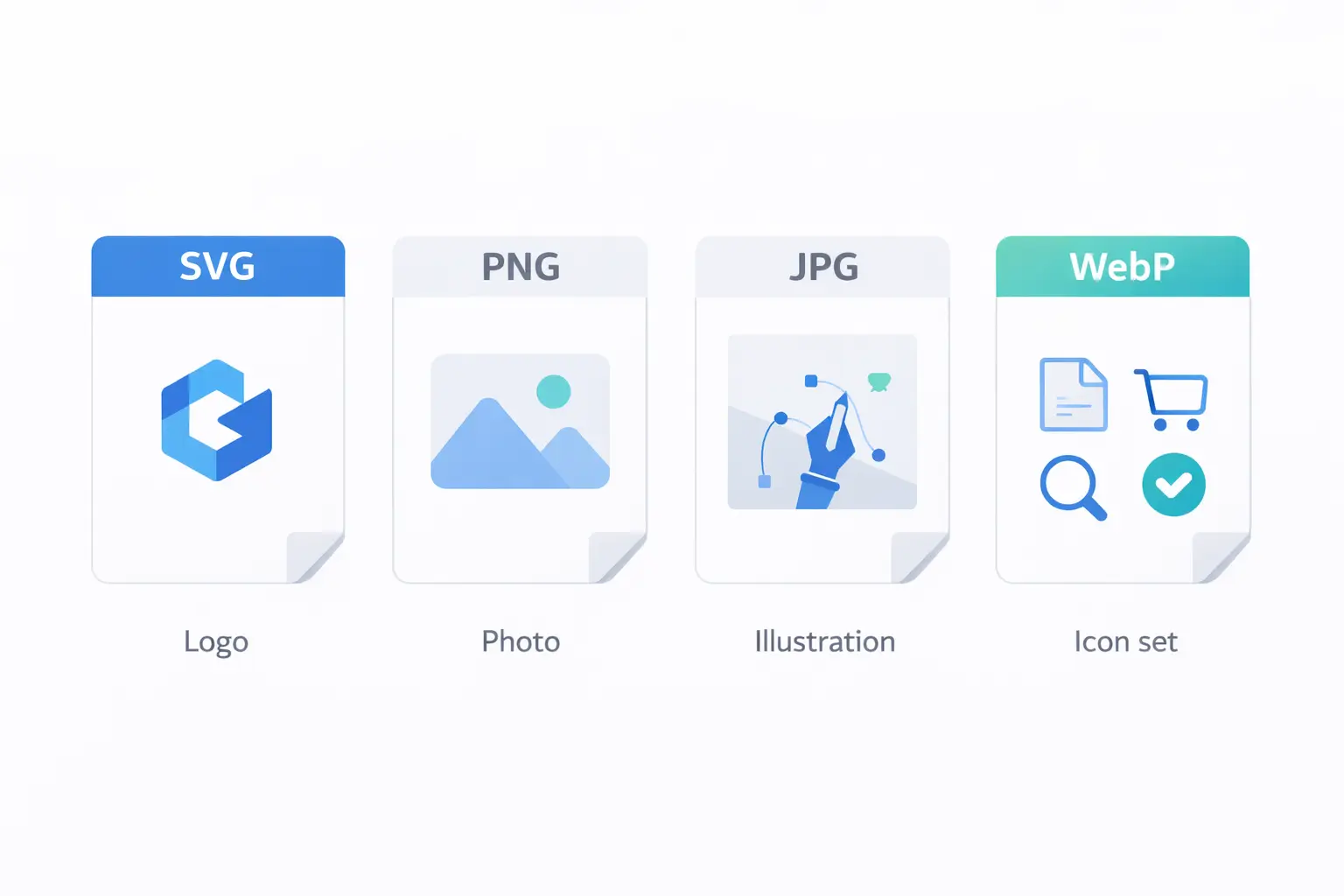
SVG became the default recommendation for many web teams because it scales perfectly and works beautifully for icons and illustrations. That recommendation is often correct, but not universal.
The better question is not "Should we use SVG?" It is "Where does SVG create the best trade-off for this asset?"
Where SVG Shines
SVG is excellent for:
- logos
- icons
- line illustrations
- simple UI graphics
- charts and vector diagrams
Why? It stays crisp at any resolution and is usually lightweight for geometric content.
Where SVG Is Not Ideal
SVG is a poor fit for:
- detailed photographs
- complex textures
- noisy image backgrounds
- very large vector exports from design tools
In those cases, raster formats like WebP or JPEG are often smaller and faster.
The Performance Angle
SVG can be tiny or huge depending on source complexity. A simple icon is great. A deeply nested exported illustration with unnecessary path data can become heavy.
Always inspect real output size before deciding.
Accessibility and Styling Benefits
One advantage of inline SVG is control. You can style parts with CSS, animate safely, and expose useful semantics when needed. This makes SVG especially strong for interactive UI components.
But inline usage should be intentional. Overusing inline SVG for every asset can bloat HTML and complicate templates.
A Practical Decision Framework
Use this rule of thumb:
- Use SVG for scalable geometric assets.
- Use WebP/JPEG for photos and rich textures.
- Use PNG when you need lossless raster with transparency and SVG is not suitable.
Then validate with real measurements:
- file size
- render quality
- loading behavior on mobile
Team Workflow Tips
To keep graphics maintainable:
- optimize exported SVGs before shipping
- remove unused groups and metadata
- avoid embedding huge raster images inside SVG files
- version assets with clear naming conventions
This keeps front-end performance predictable.
Final Takeaway
SVG is a powerful format, but it is not the universal answer. Choosing the right format per asset delivers better performance and better user experience than strict format dogma.
If your team wants a practical asset strategy for modern web products, Duo Dev Technologies can help you define format rules and optimization standards that scale.