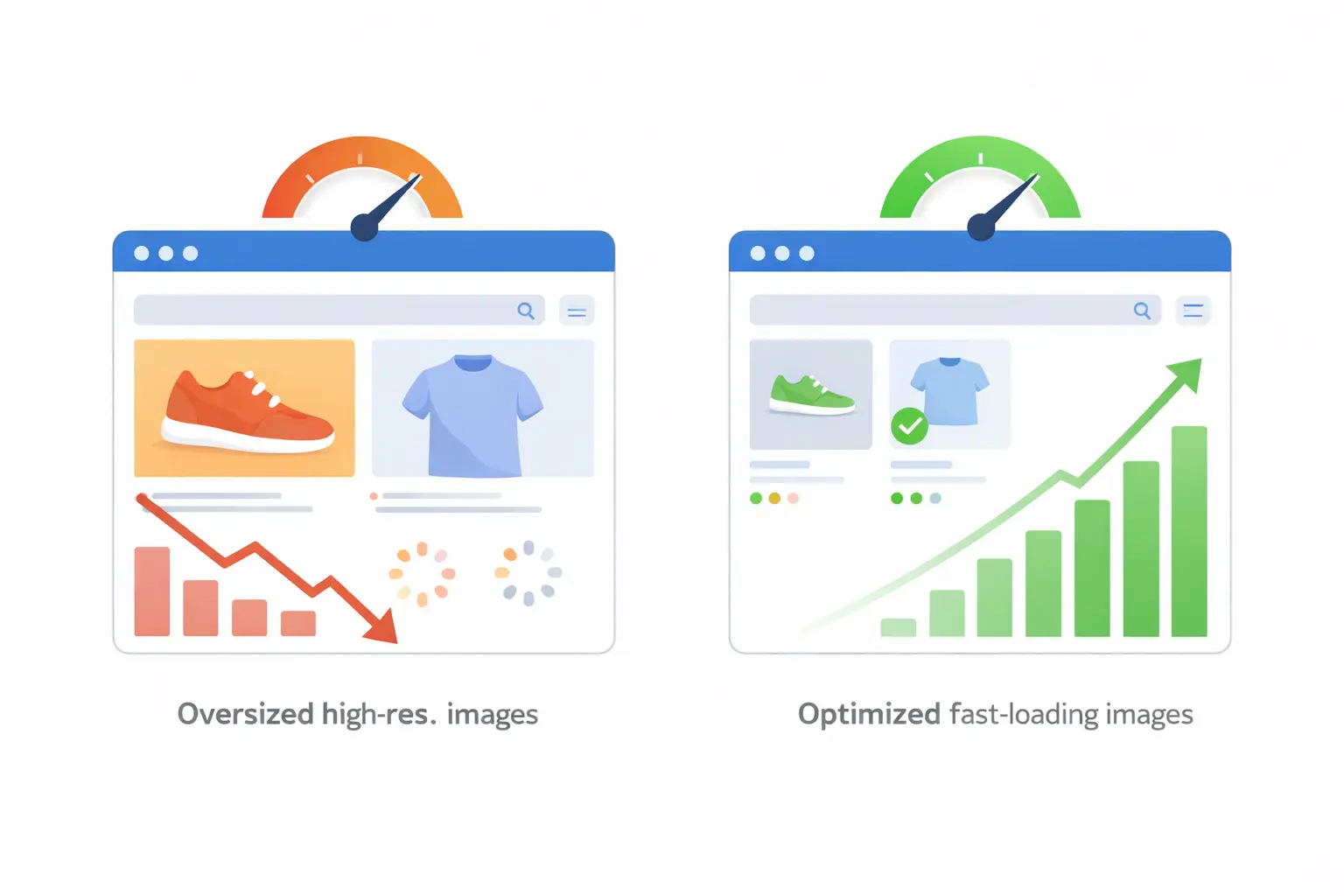
High-resolution visuals look impressive in design reviews, but they can damage real-world performance when shipped without optimization. For users on mobile or unstable networks, oversized images delay trust-building moments and buying actions.
Conversion does not fail only because of bad copy or weak offers. It often fails because pages feel slow at the exact moment users are deciding.
The Hidden Cost of "Crisp" Images
Large image files increase:
- time to first meaningful paint
- scroll and interaction delay
- data consumption on mobile plans
- abandonment before key CTA visibility
Even a single oversized hero image can outweigh the rest of your page assets.
Where Teams Commonly Overdo Resolution
Typical problem areas:
- desktop-sized hero images served to mobile
- full-size product photos in listing cards
- PNG files used where WebP is enough
- no responsive srcset strategy
These are operational issues, not design failures.
How This Impacts Conversion
Slow loading changes behavior:
- users bounce before value proposition loads
- trust drops when layout shifts and stutters appear
- checkout pages feel unreliable
- repeat visits decline
Performance is part of brand perception.
A Practical Optimization Workflow
Use this repeatable sequence:
- Resize images to display dimensions before upload.
- Convert compatible assets to WebP.
- Compress images with quality targets, not guesswork.
- Use responsive image variants for different breakpoints.
- Lazy-load non-critical visuals below the fold.
This usually improves both speed and visual stability.
Quality vs Speed: You Can Have Both
Optimization is not about making everything blurry. It is about removing invisible excess.
If users cannot perceive quality difference but load time improves significantly, that is a clear win.
Measurement Checklist
Track before and after:
- Largest Contentful Paint
- image transfer size per page
- bounce rate on mobile landing pages
- conversion rate on key funnels
Measure by page type, not just site-wide averages.
Final Thoughts
High-resolution images are valuable only when they do not block user progress. A balanced image strategy improves performance, trust, and conversion at the same time.
If you want help creating an optimization playbook for your pages, Duo Dev Technologies can help you define image standards that protect both visual quality and business outcomes.