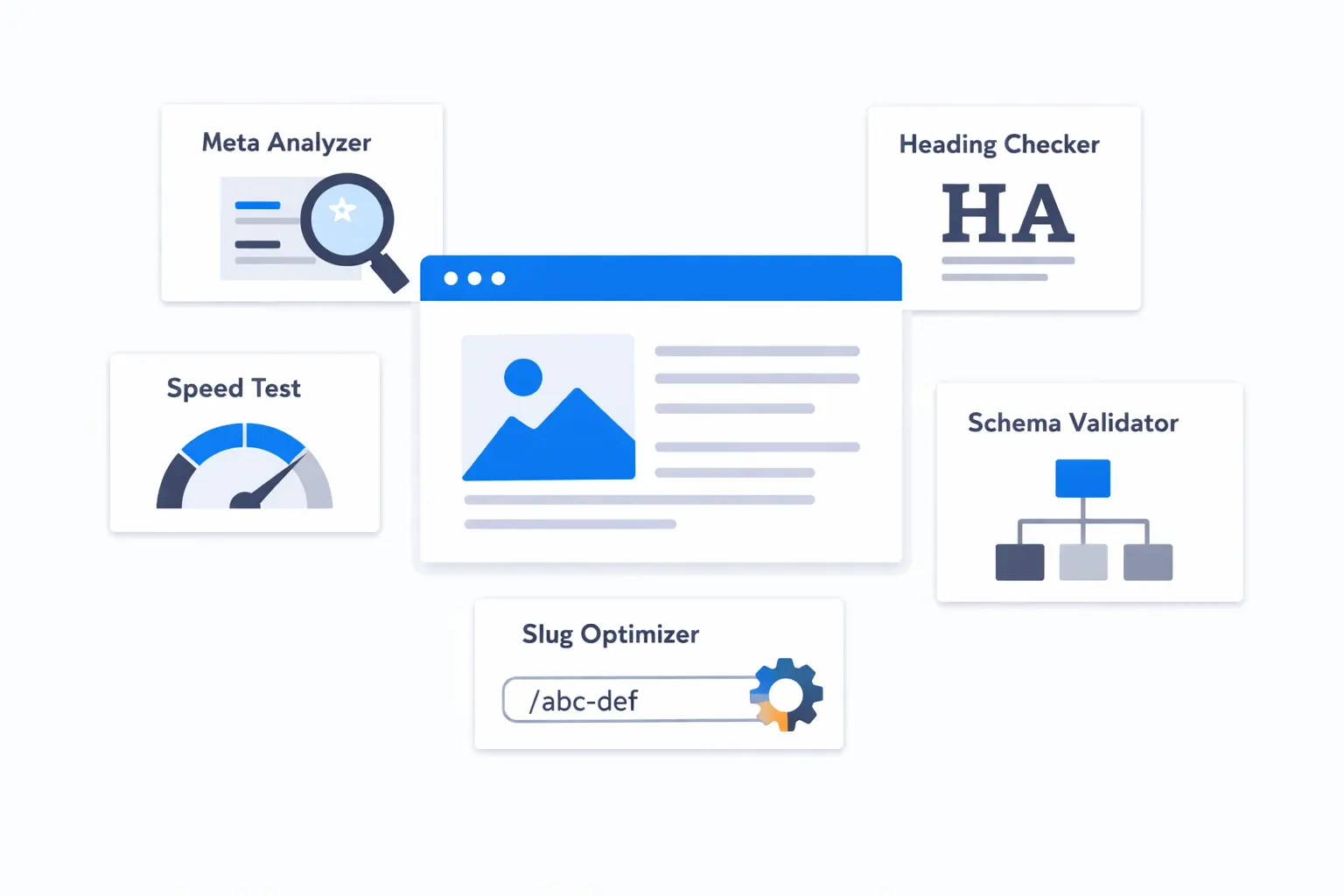
On-page SEO improves when execution is consistent, not when tools are expensive. Many teams already know what to fix, but they lack a repeatable workflow that fits weekly publishing and product updates.
A lightweight utility stack is enough to catch most issues before they affect rankings.
Utility 1: Meta Tag Analyzer
Start with titles and descriptions because they shape click-through behavior.
Check for:
- uniqueness
- clear search intent alignment
- readable length
- proper Open Graph support
Better snippets improve traffic quality even without ranking jumps.
Utility 2: Heading and Structure Review
Content must be easy to scan by humans and parsers.
Validate:
- one clear H1
- logical H2 and H3 hierarchy
- no skipped heading levels
- descriptive section labels
Weak structure hurts both UX and SEO clarity.
Utility 3: Speed and Payload Checks
On-page SEO is tied to performance. Slow pages reduce engagement and can impact visibility.
Look for:
- oversized assets
- unnecessary script weight
- render delays on mobile
You do not need perfection. You need stable, fast-enough pages in real conditions.
Utility 4: Schema and Rich Result Validation
Structured data helps search engines understand your content type and context.
Validate schema syntax and required fields on key templates like:
- blog posts
- product/service pages
- FAQ sections
Broken schema is a missed opportunity at best and a trust issue at worst.
Utility 5: Slug and URL Quality Checker
URLs should be clean, descriptive, and stable.
Review:
- lowercase consistency
- hyphen separation
- no unnecessary parameters
- canonical alignment
This prevents index dilution and improves readability.
A Simple Weekly Workflow
Use this 30-minute routine:
- pick one new page and one existing top page
- run all five utility checks
- log issues by impact level
- fix top-priority items in same sprint
Small weekly improvements outperform rare large audits.
Mistakes to Avoid
- obsessing over one score while ignoring user intent
- rewriting pages without baseline measurement
- neglecting internal linking and context relevance
- shipping content before on-page QA is complete
A balanced checklist beats random optimization.
Final Takeaways
You can run strong on-page SEO operations with free utilities if your process is disciplined. Focus on fundamentals, execute consistently, and track outcome changes over time.
If you want a custom on-page SEO operating checklist for your team, Duo Dev Technologies can help map tools, process, and ownership clearly.