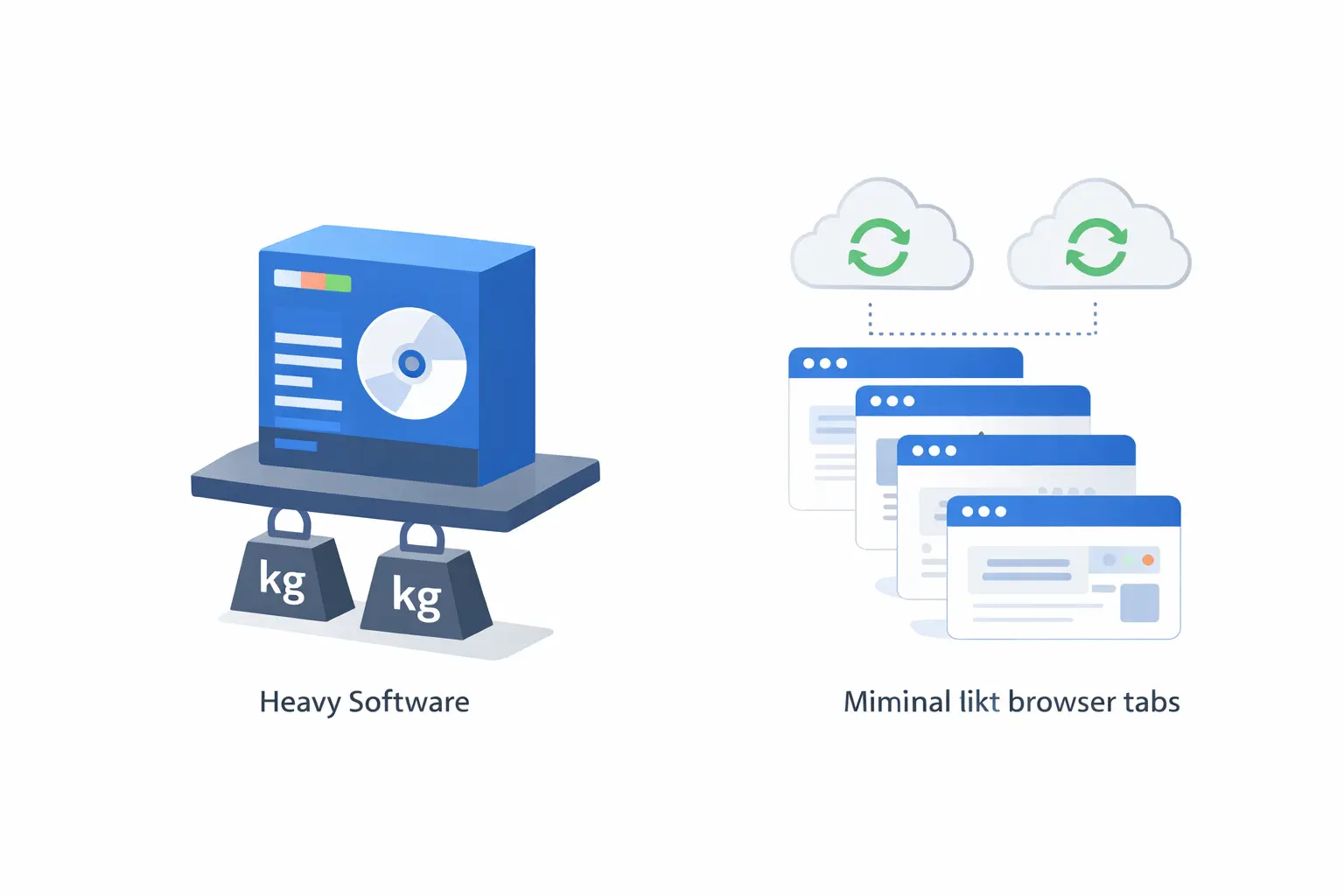
For years, teams accepted a trade-off: powerful software meant large installs, device lock-in, and maintenance overhead. That model is changing fast.
Browser-based tools now handle many professional tasks with enough depth for real work, while removing much of the setup and upkeep burden that traditional suites require.
What Changed
Three shifts made this possible:
- stronger browser capabilities
- reliable cloud infrastructure
- user expectation for immediate access
People no longer want to wait for installation and environment setup just to complete routine tasks.
Why Teams Prefer Browser Tools
Browser-first workflows offer practical advantages:
- no local install friction
- faster onboarding for new team members
- easier cross-device access
- lower support and update overhead
- simpler collaboration and sharing
These benefits matter more as teams become distributed.
Cost and Operations Impact
Heavy suites often bring hidden costs:
- license complexity
- upgrade coordination
- device compatibility issues
- IT support load
Browser-based alternatives reduce many of these operational penalties.
Where Browser Tools Work Best
They are especially effective for:
- file conversion and formatting
- lightweight editing and validation
- content and SEO checks
- utility workflows used across departments
Not every advanced workflow should move to browser, but many day-to-day tasks already can.
Addressing Common Concerns
Some teams still worry about:
- privacy and data handling
- offline availability
- feature depth
These are valid concerns. The right approach is to classify tasks by sensitivity and complexity, then map each to the right tool tier.
A Balanced Tool Strategy
Use a hybrid stack:
- Browser tools for fast routine operations.
- Specialized desktop software for deep advanced work.
- Clear policy for which data can be processed where.
This gives speed without sacrificing control.
Final Takeaway
Browser-based tools are replacing heavy suites not because they are trendy, but because they reduce friction in real workflows. Teams move faster when basic operations are accessible, consistent, and easy to share.
If you want help designing a practical tool stack that balances speed, cost, and security, Duo Dev Technologies can help you build one.